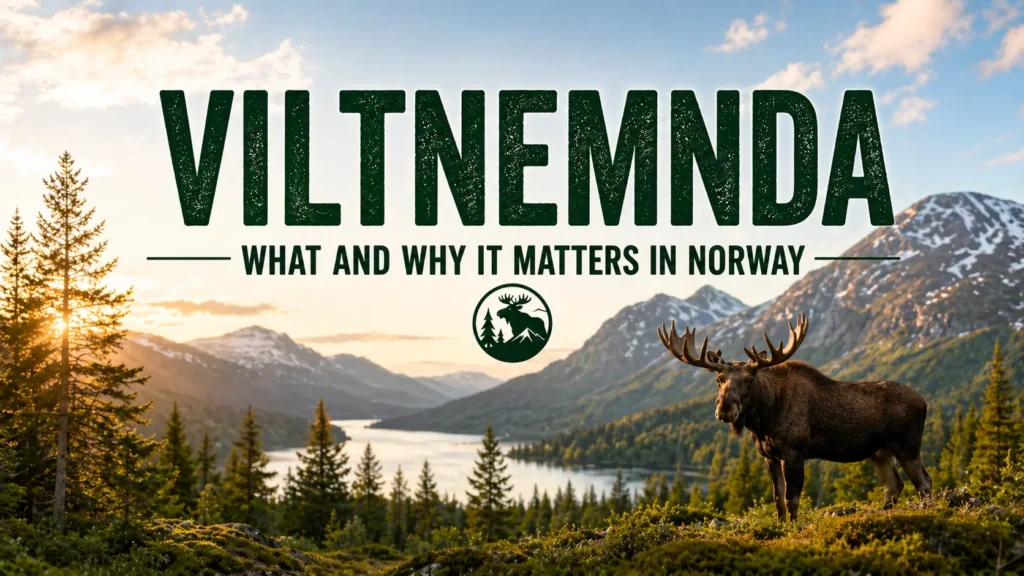

You have likely heard the word Viltnemnda, had you lived in rural Norway, or were simply interested in knowing how the country handles its wild animals. It sounds official.
And it is. However, when you know what it really does, it ceases to be confusing and begins to make a lot of sense.This article dissects it all tell the truth about what Viltnemnda is, what it does, and why it is important to ordinary people
What Is Viltnemnda?
Viltnemnda is a Norwegian local wildlife committee. Each municipality, known as a kommune, has one. The board consists of a few elected or appointed individuals.
They are tasked with the responsibility of handling wildlife matters in their locality.
Consider it as a neighbourhood watch – but wildlife. These people are not on the
lookout of suspicious individuals, but rather on the lookout of wild animals, hunting activity and nature management in the locality.It is a Norwegian word. Vilt refers to wild game or wildlife. Nemnda is committee or board. So Viltnemnda merely translates to: wildlife committee.
Why Norway Even Needs This?
Norway boasts of large forests, deep fjords and mountains that run hundreds of kilometres. Moose roam along the roads. Deer are grazing beside farmland.
Beavers construct dams which occasionally flood fields. Sheep are sometimes killed by wolves and lynx.There is a sharing of space between wild animals and humans.
Such sharing must be managed. Unless it is monitored by someone, it will go amiss. Excessive moose in a single location can ruin young forests. Excessive hunting may lead to the downfall of the deer population in the long run.
Norway resolves this by a decentralised system. The country does not have all the wildlife decisions made in Oslo but instead real power is given to local municipalities. Local individuals are familiar with their land.
They are familiar with the location of the moose during winter. They are aware that there is a farmer who loses sheep to predators every spring. It is precisely that local knowledge that good wildlife management requires.
All this is legally based on the Norwegian Wildlife Act (Viltloven) which you can read at lovdata.no
What Does Viltnemnda Do?
The board deals with a broad scope of practical activities. The following is a concise summary:
| Task | What It Means in Practice |
| Set hunting quotas | Decide how many animals can be hunted each season, based on population data |
| Issue hunting permits | Approve who can hunt, where, and for which species |
| Handle wildlife damage | Investigate when animals destroy crops, fences, or property |
| Manage predator conflicts | Assist farmers dealing with wolves, bears, or lynx attacks on livestock |
| Report to national bodies | Send local wildlife statistics to Miljodirektoratet and Statsforvalteren |
| Advise local planners | Provide wildlife expertise for land use and development decisions |
Hunting Quotas: A More Detailed Look.
One of the most obvious things that Viltnemnda does is to control hunting. The board sits every year to determine quotas before the hunting season begins. These are legal restrictions on the number of animals to be taken.The figures are not speculations. Viltnemnda relies on wildlife surveys, reports of local hunters, and past season data.
They also adhere to the Norwegian Environment Agency at miljodirektoratet.no.After the quota has been established, hunters seek permits. On approval, they are given a tag, a legal permission to hunt a particular animal.
Results are reported back to the board after the hunt. This information is used in next year planning.
Who Can Touch Viltnemnda?
A lot of people believe that Viltnemnda is a hunters place. It is not. You may contact your local board when:
- One of the wild animals has been hurt or killed in the vicinity of your premises.
- Animals are destroying your crops, garden or land.
- You wish to take out a hunting permit.
- You have observed or believe there is illegal hunting (poaching).
- Your livestock has been attacked by predators.
- You need information on local hunting seasons or regulations.
To locate your local board, go to the official site of your municipality and search viltnemnda. There is normally a listing of contact details and meeting schedules.
What Is the Board Composition?
The majority of Viltnemnda boards consist of three to five members. Meetings are chaired by a chairperson (leder) who signs decisions. Members are typically local politicians or individuals who are appointed because of their expertise about nature.
The board is often advised by a wildlife officer, known as a viltforvalter. The board is accountable to the municipal council and in regional affairs, to Statsforvalteren.
Final Thoughts
Viltnemnda is among such silent institutions that ensure that things run smoothly without the attention of the majority. It is at the crossroads of nature, community and
local governance. It provides ordinary Norwegians with a genuine influence on the management of wild animals in their locality.You are a hunter planning the elg
season, a farmer with wildlife damage, or you are simply a Norwegian outdoors person you should know your local Viltnemnda. Reach out to them. They have
come to assist. To access additional information, go to the national hunting association of Norway at NJFF.no.
For official information and updates, you can visit Viltnemnda, which provides guidance on wildlife management and regulations.
Frequently Asked Questions
In English, what is the meaning of Viltnemnda?
It is wildlife committee or wildlife board. It is a Norwegian local authority that deals with wild animals and hunting on a municipal level.
Is Viltnemnda a Norwegian government?
Yes. It is a governmental agency of the local municipal government (kommune) and is governed by the Norwegian legislation, namely the Wildlife Act of 1981
Is any one eligible to take a hunting permit?
Yes, in principle. You need to have a valid hunting licence and then apply locally. The board considers every application according to the quotas and other considerations.
What should I do when I do not agree with a decision?
You can appeal. Viltnemnda may have its decisions appealed to Statsforvalteren. In the case of nationally protected species, Miljodirektoratet can also be involved.
If you want read more informational article visit: THECRACKSTUBE